The Corp of the World
Overview
The world of this narrative is a vast universe entirely separate from Earth. It consists of many planets, several of which are technologically advanced and maintain regular interplanetary connections through spacecraft.
Forgotten Origins
Everything began on a primordial planet in a distant galaxy. Its name and location have been lost in time, covered by myth and silence. Yet on that ancient world the great Ages followed one another shaping the destiny of humanity.
- Dawn Age, the birth of the first civilizations. Primitive kingdoms, myths of gods and heroes who taught fire, cultivation and the earliest laws. An age of memory and legend.
- Shards Age, the age of fragmentation. City states, small kingdoms and endless wars. People lived among shards of civilization surrounded by ruins and forgotten technologies they no longer understood.
- Flame Age, the age of fire and conquest. Great kingdoms became empires, wars multiplied and societies were forged in flame. The first dynasties rose and became the roots of later power.
- Crowns Age, the age of crowns. Monarchies, aristocracies and empires spread across the planet. Dynasties such as the Soroyoto gained lasting fame. Law, armies and religions took their final shape.
- Iron Age, the age of industry. Cities filled with smoke and vast factories, the first nuclear reactors, weapons of annihilation and the birth of artificial intelligence. The first cautious but decisive steps into space began.
- Stars Age, no one knows how these societies left their original world, how they traveled to the stars and colonized so many planets. A mysterious gap exists in their history and memory. Yet this expansion led to highly advanced civilizations throughout many worlds.
- Current Age, the age of our story. Empires, oligarchies and planetary alliances dominate the universe. The memories of earlier ages have become myth yet the struggles for power and survival repeat in new forms.
Political Landscape
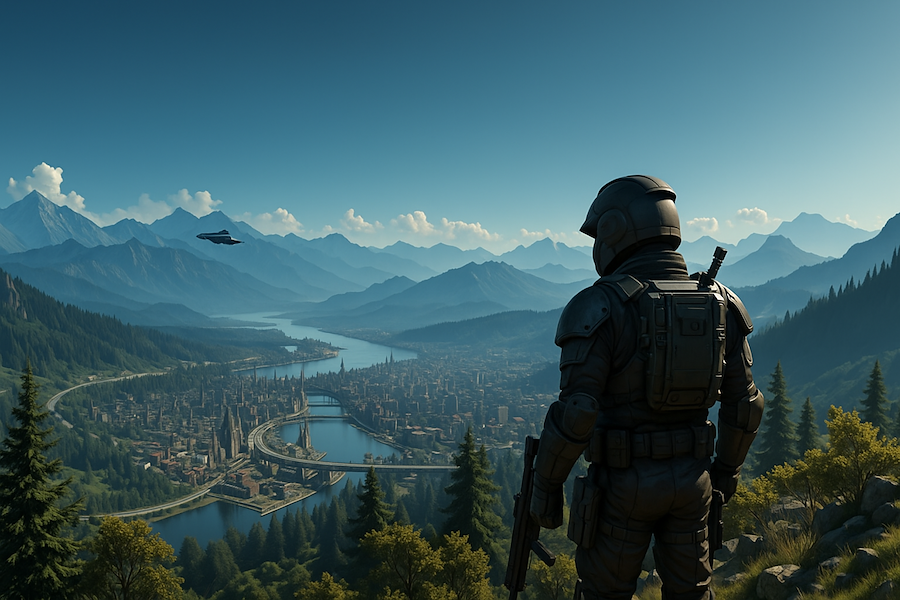
There are planets that function as unified states and planets divided into many different countries. Their systems of government also differ widely.
- Oligarchic and authoritarian: dictatorships, empires, theocracies, aristocracies, timocracies.
- Liberal and parliamentary: states with features of parliamentary democracy, assemblies, councils and political parties.
Major Alliances
Three are the principal interplanetary alliances.
- Syndarion Union of Nations (SUN), under the dominance of the Sorestian Empire, consisting mainly of authoritarian regimes.
- Liberal Alliance of Planets (LAP), an alliance of parliamentary and aristocratic states without a unified hegemony.
- Order of the One (OTO), a strict monotheistic alliance of despotic planet states.
The SUN and the LAP follow the religion of the Heptad, a polytheistic worship of seven gods, while the OTO is fanatically monotheistic.
Not all planets belong to these alliances. Some remain independent or internally divided. Many planets have Planetary Councils similar to the United Nations although not all countries on a given planet always participate.
Social Structure
On many planets:
- The population is concentrated mainly in cities. Often and more so in parliamentary countries cities are divided into sectors with controlled entry and exit and dense digital surveillance of the population along with a strict Social Point System.
- Rural regions are almost empty dominated by large corporate farms and industrial installations.
- Daily life is under constant monitoring through cameras drones and analytical artificial intelligence systems.
- Personal devices such as plex units and wallcast networks are integrated into the surveillance grid.
Languages and Peoples
Humanity across the planets remains biologically similar with only minor differences suggesting a shared ancient genetic origin but divergent evolution. Each world has its own language yet there is an almost universal common language Comla whose origin remains unknown.
Historical Conflict
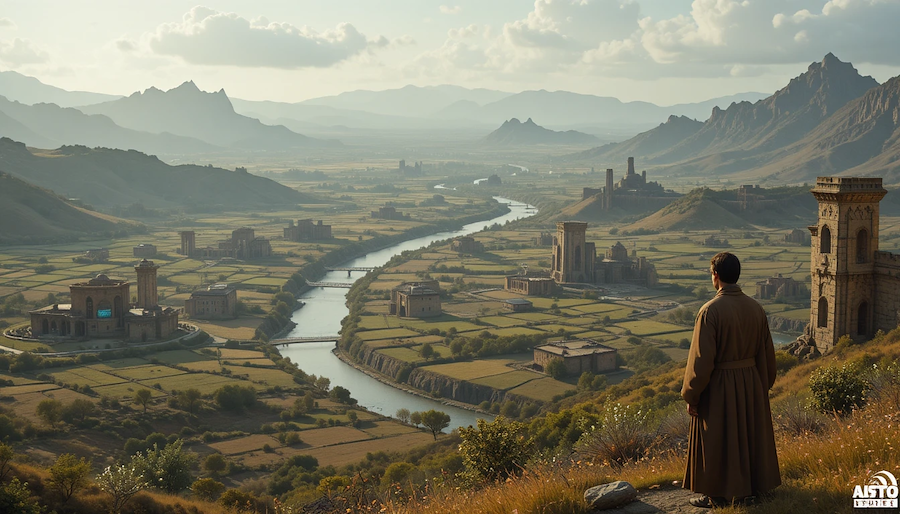
In the past the SUN and the LAP fought a massive war. During it they discovered planets on the fringes of known sectors where the peoples had entirely different political systems.
- Laws required popular approval before taking effect.
- Citizens could revoke laws or remove officials.
- The societies were technologically simple farmers and herders yet politically autonomous.
This discovery alarmed both alliances which feared the spread of such forms of governance. They created joint forces to exterminate these populations.
The Corp and the Corpers
During these extermination campaigns mysterious protectors appeared.
- Unknown warriors with advanced craft armor and weapons.
- They saved entire populations by confronting the forces of the SUN and the LAP.
Rumors spread about an organization called the Corp whose members were known as Corpers. They were said to protect and promote the idea of self governance and freedom for societies.
Legends and Rumors
- The Corp adopts war orphans and trains them secretly to become new Corpers.
- Keepers are families tasked with preserving and transmitting the ideals of the Corp across centuries even without direct contact.
- In feudal or neo feudal societies the Corp appears to pressure rulers to govern more humanely sometimes through threats or violence.
- It also passes knowledge in fields such as medicine physics architecture and engineering to less developed societies.
Few believe these stories except the soldiers who faced them during the extermination campaigns. To some the Corp is a myth to others a living symbol of resistance and a reminder that power can be challenged.
Explorers
The Explorers are a mysterious people with a long history in the galaxy. They exist as a dedicated society focused solely on mapping the galaxy and placing beacons that allow faster than light travel. They are respected by all other peoples and powers and no one interferes with their work. All powers SUN LAP and OTO use the space routes mapped by the Explorers for their travel.
The Explorers do not study the celestial bodies they discover. They simply record their positions. In appearance they differ from the other peoples of the known galaxy.
The Pattern
The history of this universe is a recurring experiment in the concentration of power in a few hands with the cost always paid by those who did not take part in the decisions. From the emergence of the first cities and the division of labor the same pattern repeats again and again.
An elite gathers resources and legitimizes itself in power and a supreme leader organizes the violence under which people live as objects of oppression and domination in constant deprivation surveillance and fear or are dragged as soldiers and raw material into bloody campaigns that leave behind suffering death and despair. The gains of leaderships are temporary the sacrifices of the peoples permanent and history resembles a mechanism that recycles injustice cruelty and destruction.
Perhaps one day the cycle will break not through a new leader but through those who have ceased to believe the promises and statements of authority. When the peoples refuse to become raw material and the soldiers cease to execute orders of conquest genocide and plunder the experiment will end.
Perhaps this is the meaning of evolution not the conquest of new worlds but liberation from the repeating pattern itself. The liberation of society from authority. Self governance.