Sentinel
Overview
Sentinel is a Corper operative and field guide who appears during the Tettari purges alongside Evlyn and later acts in Lastor and Sanctheim. He functions as a catalyst for events, intervening to limit massacres and carrying critical information to leaders and commanders.
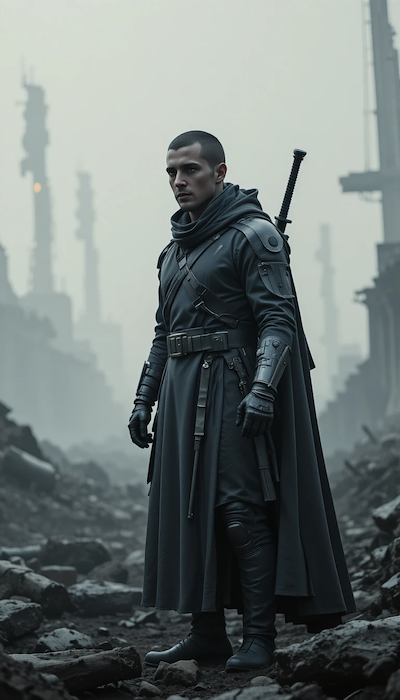
Role and Affiliation
He belongs to a small brotherhood whose mission is to prevent the annihilation of human societies by authoritarian powers and unchecked technology. He does not serve any state authority. He collaborates selectively with actors such as Evlyn and guides individuals like Ralen Voss when circumstances demand it.
Appearance and Gear
Sentinel wears simple robes resembling those of a votar or ascetic, supplemented when necessary by lightweight, high-absorption armor. He uses a portable sword, selective launchers, and a small fast craft. His presence is calm yet commanding, his speech precise and without unnecessary words.
Abilities
- Tactical planning and composed decision-making
- Targeted use of advanced weapons and suppression of combat robots
- Influence over leaders through reliable intelligence and warnings
- Concealment of tracks and discreet movement in hostile environments
Notable Events
Tettera
He monitors and records the Tettari purges. Together with Evlyn, he destroys robot squads using missiles and ground-level combat. He wounds Markan Venar and indirectly changes the course of Lako Serrad’s life when Evlyn forces Serrad to live with a debt of life.
Lastor
At the monastery of Veyla he meets Ralen Voss and Orven Talvek. His message is withdrawal from Lastor and re-organization. He declares that Voss has ceased to be a tool of the regime and is becoming a tool of History.
Sanctheim
He appears to Sigrun Halvek and Mardek Thalon. He warns them of invisible constraints closing around the new High One and points toward Olmara and Markan Venar as the next link in the chain. He urges restraint until evidence is secured.
Personality and Motivations
Sentinel is driven by a clear moral imperative: the protection of civilians and the containment of wartime mechanization. He avoids displays of power, employs only the minimum necessary force and wants key figures to regain autonomy and assume responsibility for their choices.